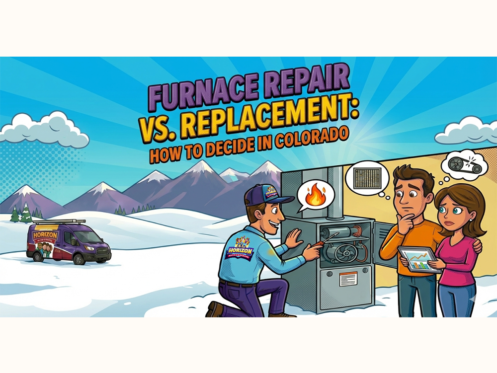
When your furnace starts acting up, there are many factors to consider when deciding between a furnace repair vs. a replacement in Colorado. The region’s extreme winters require a system that is reliable and can withstand cold snaps and temperature swings. This question, repair or replacement, affects your home comfort and your wallet. As an expert heating specialist, Horizon Services can conduct a thorough furnace consultation and help you choose the best solution. This blog will also provide you with tips and advice to help you make your decision.
Furnace Repair vs. Replacement in Colorado
Understanding when to have heating repairs in Colorado rather than replace your furnace will save you thousands of dollars and ensure your home stays warm and safe throughout the heating season.
How Long Do Furnaces Last in Colorado Homes?
Typically, furnaces in Colorado homes last 15 to 20 years with proper, routine maintenance.
Colorado’s high altitude means thinner and drier air that affects a furnace’s components and combustion process differently than in more humid areas. Pair this with periods of extreme cold during the winter, and your furnace works extremely hard. This is why proper annual maintenance from an HVAC contractor in Colorado, like Horizon Services, is crucial. Neglecting a furnace can reduce its lifespan by several years.
When Furnace Repair Makes Sense
There are many instances when furnace repair in Colorado makes sense.
Minor or Isolated Issues
Our technicians will quickly find the furnace issue. If it’s isolated to a specific part, like a dirty air filter or flame sensor, worn-out blower belt, or faulty thermostat, repair is usually the most cost-effective solution.
Newer Systems
If your furnace is under 10 years old, repairing it makes financial sense. Usually, repairs in a newer system are quite minor.
Low Repair Costs
Simple repairs like replacing a capacitor, cleaning a pilot assembly, or addressing minor electrical issues will have relatively low furnace repair costs in Colorado.
Good Efficiency and Safety Performance
If your furnace is heating your home to your desired comfort levels, keeping your energy bills at a reasonable level, and passing safety inspections, repair is the more logical choice.
Signs It’s Time to Replace Your Furnace
Conversely, understanding the warning signs of furnace replacement is crucial.
Frequent Breakdowns
If you need repairs every season, your system is nearing the end of its lifespan. The added costs of multiple repairs will quickly outweigh the cost of a new system.
Rising Energy Bills
If you have noticed your energy bills rising without any changes to your heating habits, this is a sign that your unit is operating at an older furnace efficiency. Older systems naturally become less efficient over time, and at some point, the costs of monthly energy waste will be high.
Uneven Heating
If your home is plagued with cold and hot spots, this is a sign that your furnace is no longer distributing heat properly. While this can be a ductwork issue, it usually means your aging system is struggling to maintain temperatures.
Strange Noises or Smells
Furnaces should be running rather quietly. Any loud noises, such as banging, hissing, or grinding, suggest expensive component failures. Similarly, any burning smells mean electrical damage, and mildew or musty smells mean mold growth.
Carbon Monoxide Concerns
Carbon monoxide concerns are serious, as they pose health risks. While some CO issues can be repaired, a common source of carbon monoxide leaks is a cracked heat exchanger. Heat exchangers are the most expensive part to repair, so in this case, furnace replacement in Colorado will be more beneficial.
Furnace Age (15+ years)
If your furnace is within that 15- to 20-year age range — even with repairs — the unit is approaching the end of its expected lifespan and will quickly lose efficiency every year.
Furnace Repair vs. Replacement: Cost Considerations
Furnace repairs are always cheaper than replacement costs. A furnace replacement cost in Colorado will be thousands of dollars, depending on the unit size, efficiency rating, and installation complexity. Still, the long-term energy savings from a new energy-efficient furnace in Colorado can save you thousands of dollars over multiple years. The efficiency is rated by the AFUE (Annual Fuel Utilization Efficiency) percentage. Older furnaces usually have an AFUE rating of 56-70%, meaning they waste a lot of energy and result in higher energy bills.
The upfront cost of a high-efficiency furnace (90+ AFUE) is greater, but its energy savings will be significant over its 15-year lifespan. The U.S. also offers federal tax credits for switching to high-efficiency furnaces.
The 50% Rule: Is It a Reliable Way to Decide?
When thinking, “Should I repair or replace my furnace?” you may have come across the 50% rule. This guideline suggests that if your repairs cost 50% or more of a new furnace, it’s more cost-effective to replace the entire unit.
This is a helpful guideline, but it shouldn’t be your only consideration when weighing the pros and cons of repairs vs. replacement. Pair this with an expert evaluation with Horizon Services for the best solution.
Why Professional Evaluation Is Key
Our expert HVAC technicians will assess every aspect of your furnace, including those that aren’t apparent to homeowners. These include:
- Heat exchanger condition
- Combustion efficiencies
- Condition of critical components.
We’ll provide accurate repair estimates, explain the root causes of any furnace issue, and offer honest assessments of whether to repair or replace, taking into account your home’s heating requirements, budget, timeline, and comfort priorities.

Schedule a Furnace Inspection with Horizon Services Today
Whether you’re experiencing current problems with your furnace system, need emergency furnace repairs, or simply want a professional opinion on its remaining lifespan, Horizon Services is here to help. We’ll inspect your furnace, explain our findings, and provide clear recommendations tailored to your specific needs and budget. Contact us today to schedule your furnace inspection.